Resources
The depth of the practice.
Ashtanga Yoga and its eight limbs, the Ashtanga Vinyasa method, the invocation, the practice guidelines, a gallery of postures, and moon days.
Ashtanga Yoga
The eight-limbed path.
Ashtanga Yoga literally means “the eight-limbed path”, a comprehensive system taught by Maharishi Patañjali to guide seekers towards Sthitaprajña, a steady, even-minded awareness and a deeper understanding of our true nature.
A Rishi is one who has direct insight beyond the senses, grounded in pure inner experience rather than external sources, and a Maharishi is one who has guided many to that state.
Yoga is essentially a process of inner simplification. While the exact origins of yoga cannot be dated, ancient yogic texts suggest it has been practised for as long as life itself has existed.
Āsana, one of its stages, means a steady, comfortable posture. Such stability, and in turn the ability to sit with an erect spine for long periods without strain, helps the practitioner forget the body and turn inward. This is possible only when the body is healthy, which is why we practise a variety of postures to cultivate physical well-being.
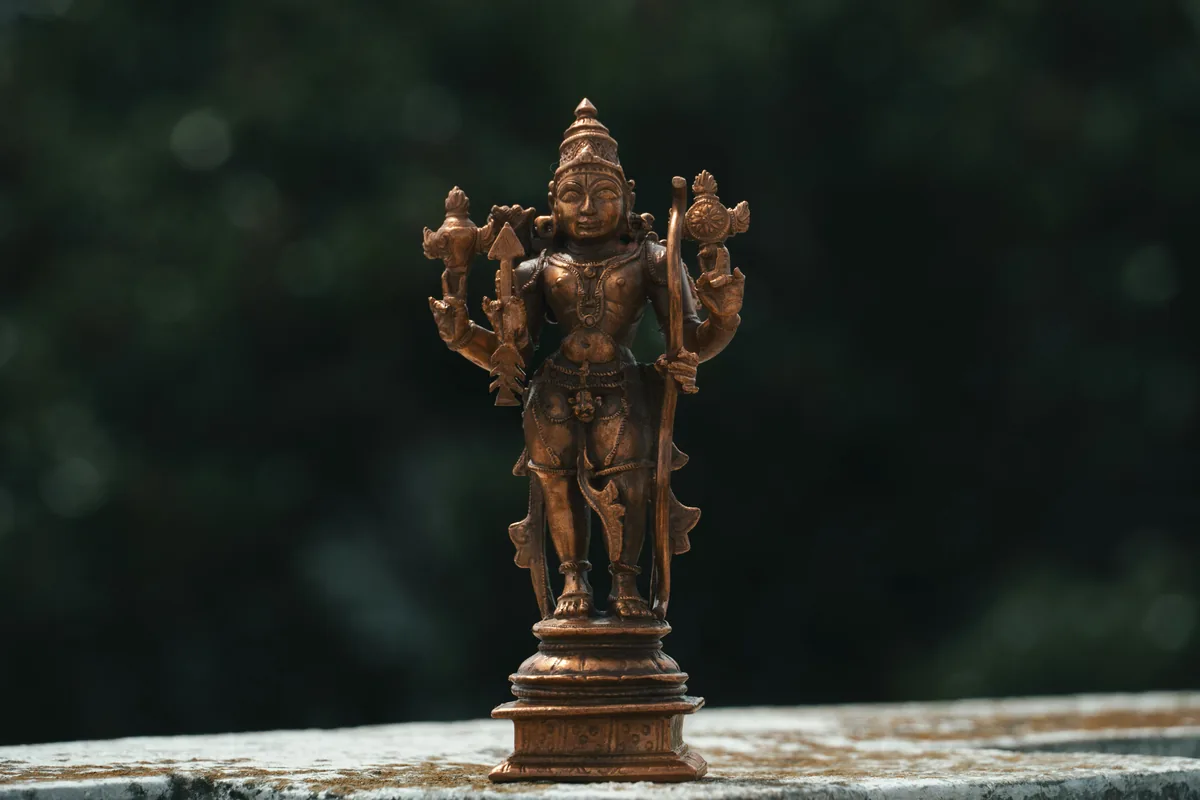
The eight limbs: foundations of the path
Sādhana refers to the chosen means of attaining a goal. Ashtanga Sādhana means dedicated practice of its eight steps to experience a calm and steady mind.
Ashtanga Vinyasa Yoga
A classical method of āsana practice.
Ashtanga Vinyasa Yoga is a classical method of āsana practice, derived from the ancient Yoga Korunta text attributed to Vamana Rishi, and later taught by Sri T. Krishnamacharya to his students.
Talking about the Yoga Korunta leads us into the realm of the enigmatic, as information about it remains elusive and its authenticity sparks debate. The widely accepted story states that Krishnamacharya, under the guidance of his guru Rama Mohan Brahmachari, studied this ancient yoga system attributed to Vamana Rishi, claimed to be around five thousand years old.
Years later, Krishnamacharya reportedly rediscovered the Yoga Korunta text in a library in Calcutta. Memorising its contents, he transmitted the teachings in full to his student Sri K. Pattabhi Jois.
Jois, relying on these teachings, went on to popularise the practice of Ashtanga Vinyasa Yoga. Supposedly, the manuscript contained lists of various āsana groups, instructions on vinyasa, dṛṣṭi, bandhas, mudras, prāṇāyāma, and philosophy. It is said the Yoga Korunta was written on weathered banana leaves and was eventually consumed by ants, leaving no physical copy behind.
Vinyasa and Tristhāna
In the Ashtanga Vinyasa system, each āsana is linked through vinyasa: specific, counted movements synchronised with the breath. This union of movement and breath develops internal heat, purifies the body, and steadies the mind.
Tristhāna refers to the three key points of focus in practice.
Ujjayi Prāṇāyāma (breath). A steady, deep and even breath, producing a gentle sound at the throat, regulates the nervous system, builds internal heat, and supports pratyāhāra (withdrawal of the senses). Breath is always through the nose, with equal inhalation and exhalation, and never forced.
Dṛṣṭi (gaze). Each āsana has a prescribed gaze point, such as nāsāgra, the tip of the nose, or hastāgra, the tip of the hand. Dṛṣṭi stabilises attention, directs subtle energy, and prevents distraction.
Bandha (energy locks). Mūla Bandha is a gentle but consistent engagement of the pelvic floor, which helps direct energy upward, stabilises the core, and supports proper alignment. Uḍḍīyāna Bandha is a subtle inward and upward drawing of the lower abdomen, active through most of the practice to stabilise the core and direct prāṇa upward.
The synchronisation of bandha and dṛṣṭi with the breath is held throughout the sequence. The practice of bandha brings an uplifting energy, which makes the body feel lighter and the movements smoother, safer and more effective.
A practitioner must remember not to be proud of their ability to perform an āsana, or disappointed at being unable to do one. There is no absolute truth in āsanas: what is possible today may not be possible later, and what is not possible today can be possible later.
Change is the only constant here, including our own bodies. Our main focus must be in realising that which never changes, our self.
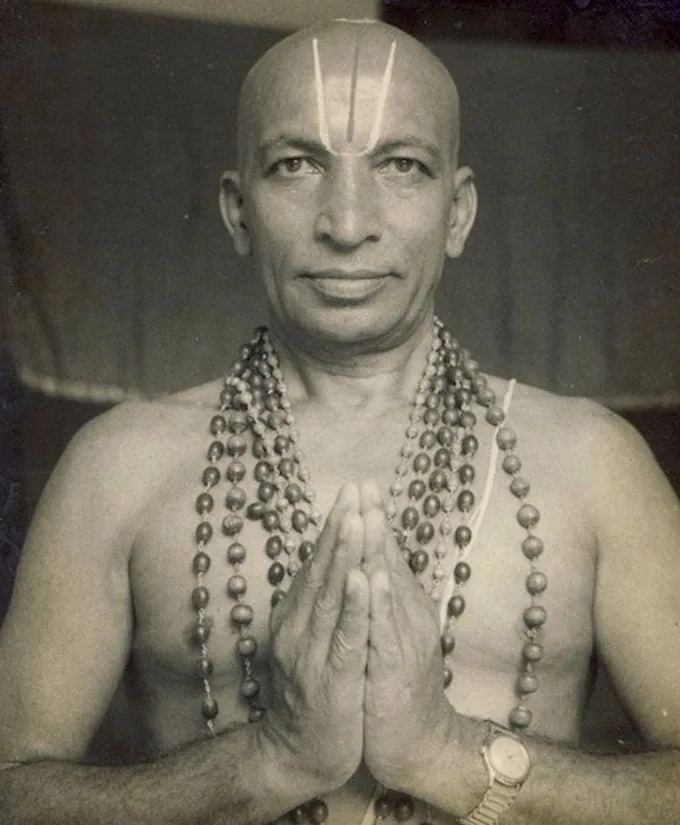
Invocation
The opening and closing mantras.
Each practice opens and closes with a mantra. The Sanskrit is shown with its transliteration and an English translation.
Opening Mantra
ॐ
Om
वन्दे गुरूणां चरणारविन्दे सन्दर्शित स्वात्म सुखावबोधे ।
vande gurūṇāṁ caraṇāravinde sandarśita svātma sukhāva bodhe
निःश्रेयसे जाङलिकायमाने संसर हालाहल मोहशान्त्यै ॥
niḥśreyase jāṅgali kāyamāne saṁsāra hālāhala moha śāntyai
आबाहु पुरुशाकारं शंन्खचक्रासि धारिणम् ।
ābāhupuruṣākāraṁ śaṅkha cakrāsi dhāriṇam
सहस्र शिर्समं श्वेतमं प्रणमामि पतञ्जलिम् ॥
sahasra śirasaṁ śvetaṁ praṇamāmi patañjalim
ॐ
Om
Praise and adorations to the lotus feet of the Gurus, for they reveal the happiness of the true Self. They are the refuge in the dark, impenetrable forest of the mind, transforming endless poison and delusion into everlasting peace. Homage to the great sage Patañjali, who has assumed the form of a luminous man, wielding a conch shell, a discus and a sword, crowned by a radiantly white, thousand-headed cobra.
Closing Mantra
ॐ
Om
स्वस्तिप्रजाभ्यः परिपालयन्तां न्यायेन मार्गेण महीं महीशाः ।
svasti prajābhyaḥ paripāla yantām nyāyena mārgeṇa mahīm mahīśāh
गोब्राह्मणेभ्यः शुभमस्तु नित्यं लोका: समस्ता: सुखिनो भवन्तु ॥
gobrāhmaṇebhyaḥ śubhamastu nityam lokāḥ samastāḥ sukhino bhavantu
॥ ॐ शान्ति शान्ति शान्तिः ॥
om śānti śānti śāntiḥ
May the leaders of the earth protect and guide us on the virtuous path. May this generation and all generations to come be blessed with auspiciousness. May all animals and knowers of divinity be blessed with eternal prosperity. May all beings in all worlds be happy.
Guidelines
Before and during practice.
- Practise on an empty stomach. Ideally practise early in the morning; if you practise later, make sure at least three to four hours have passed after a meal and the stomach feels light. Avoid drinking water during practice, and for 30 minutes before and after, but stay well hydrated through the day.
- If you have a serious health condition, such as high blood pressure, heart problems, recent surgery or a severe injury, follow your doctor’s advice before practising, as Ashtanga Vinyasa Yoga may not be suitable in such cases.
- For female practitioners, it is traditionally advised to rest during the initial heavy-flow days of menstruation. If you choose to practise, avoid inversions, deep twists and physically demanding postures.
- Each āsana is a stepping stone to the next, designed to build strength, stability and flexibility progressively. Skipping ahead without proper alignment and readiness can lead to injury. The teacher may ask you to repeat an āsana until it can be performed with ease and correct alignment before moving on. This is for your safety and long-term progress, as injuries can set you back physically and mentally.
- During practice, develop the habit of listening to the body. Listening means being aware of the different sensations an āsana or vinyasa produces, and adjusting the body accordingly.
- Ashtanga Vinyasa Yoga is a bona fide system. It must be learnt from a qualified and experienced teacher, and practised in the right way. Do not rush through the sequence; breathe deeply, and allow yourself to fully experience the calm and vitality it brings.
- Moon days bring fluctuating mental and physical energies, which can heighten the risk of injury. For this reason, it is recommended to rest from physical practice on these days.
Gallery
Postures of the practice.
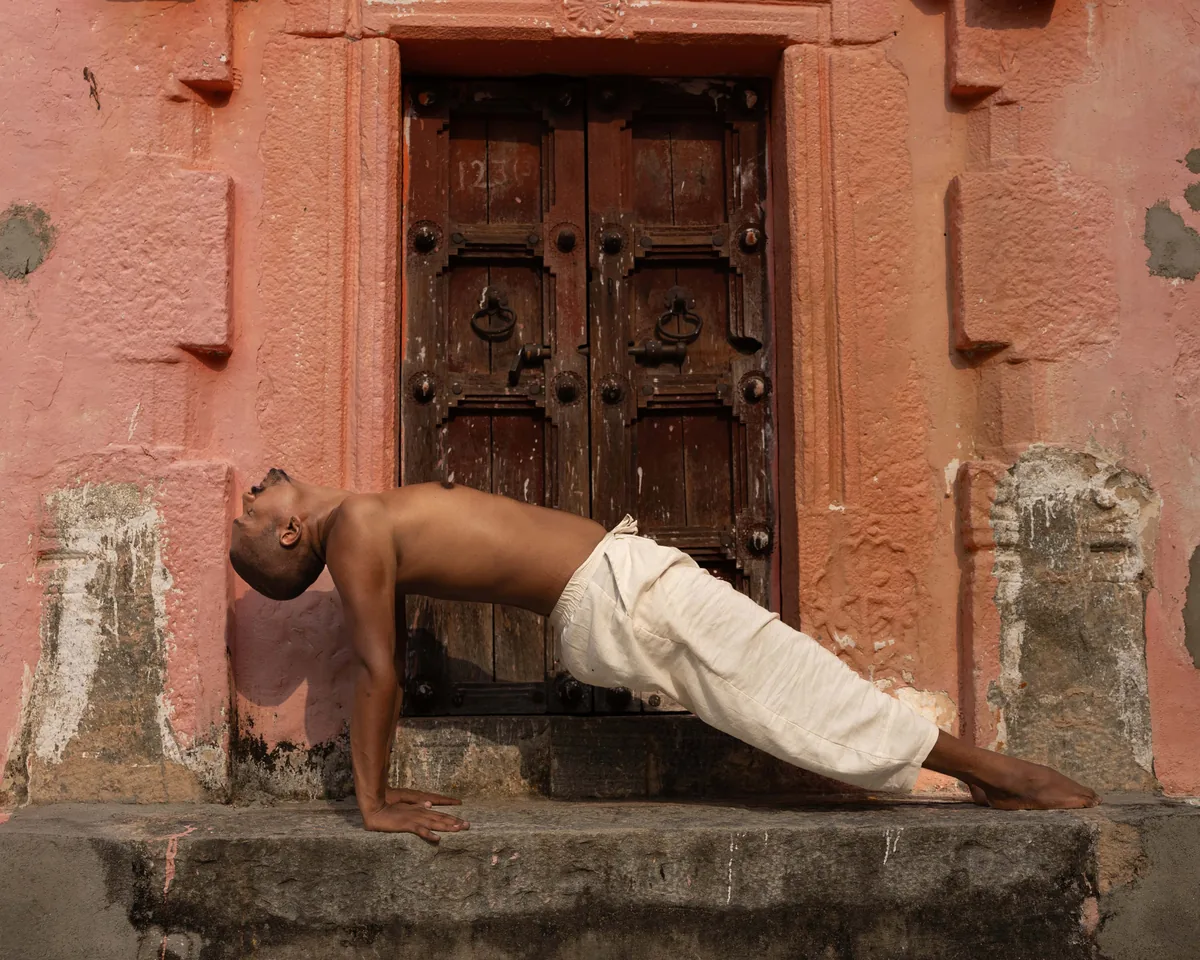
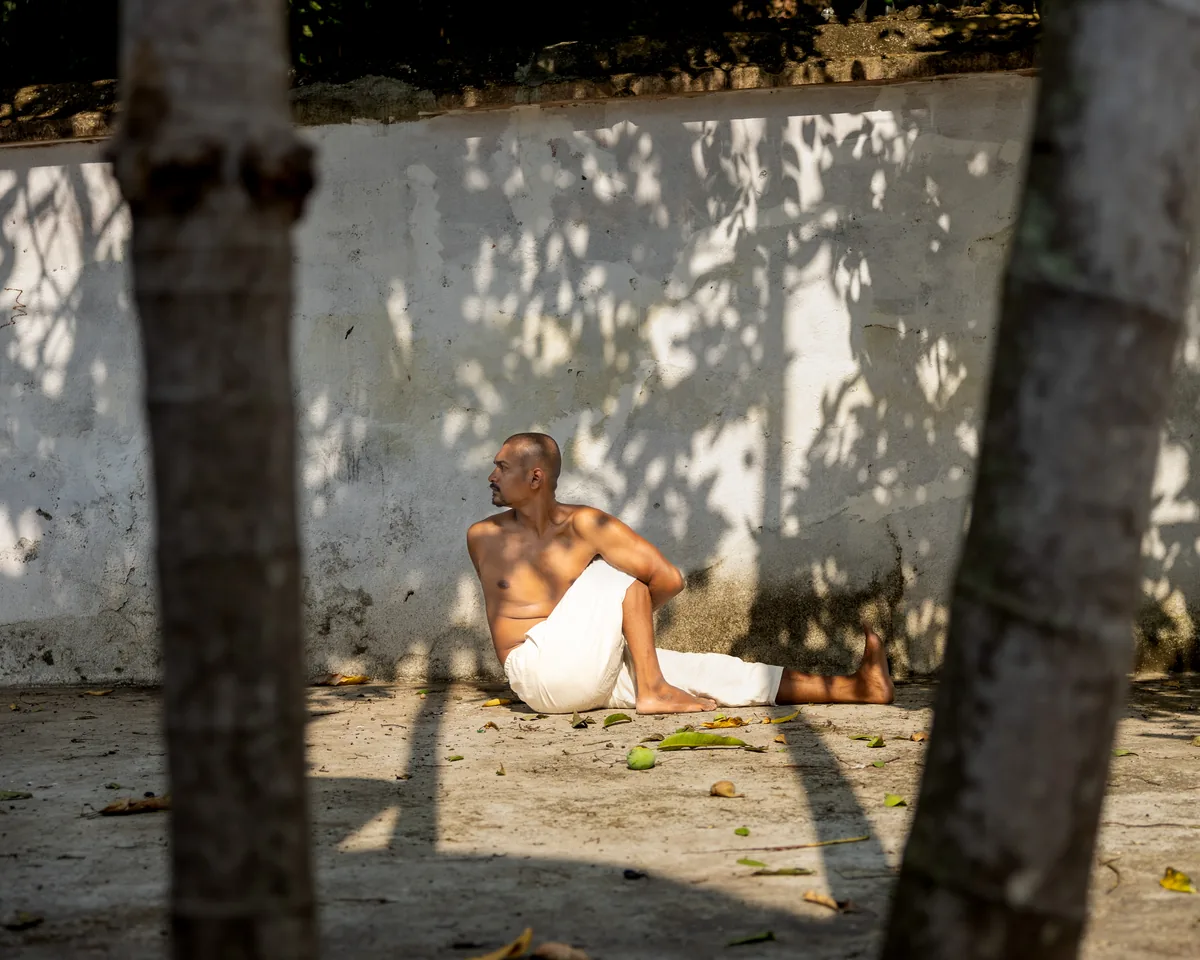
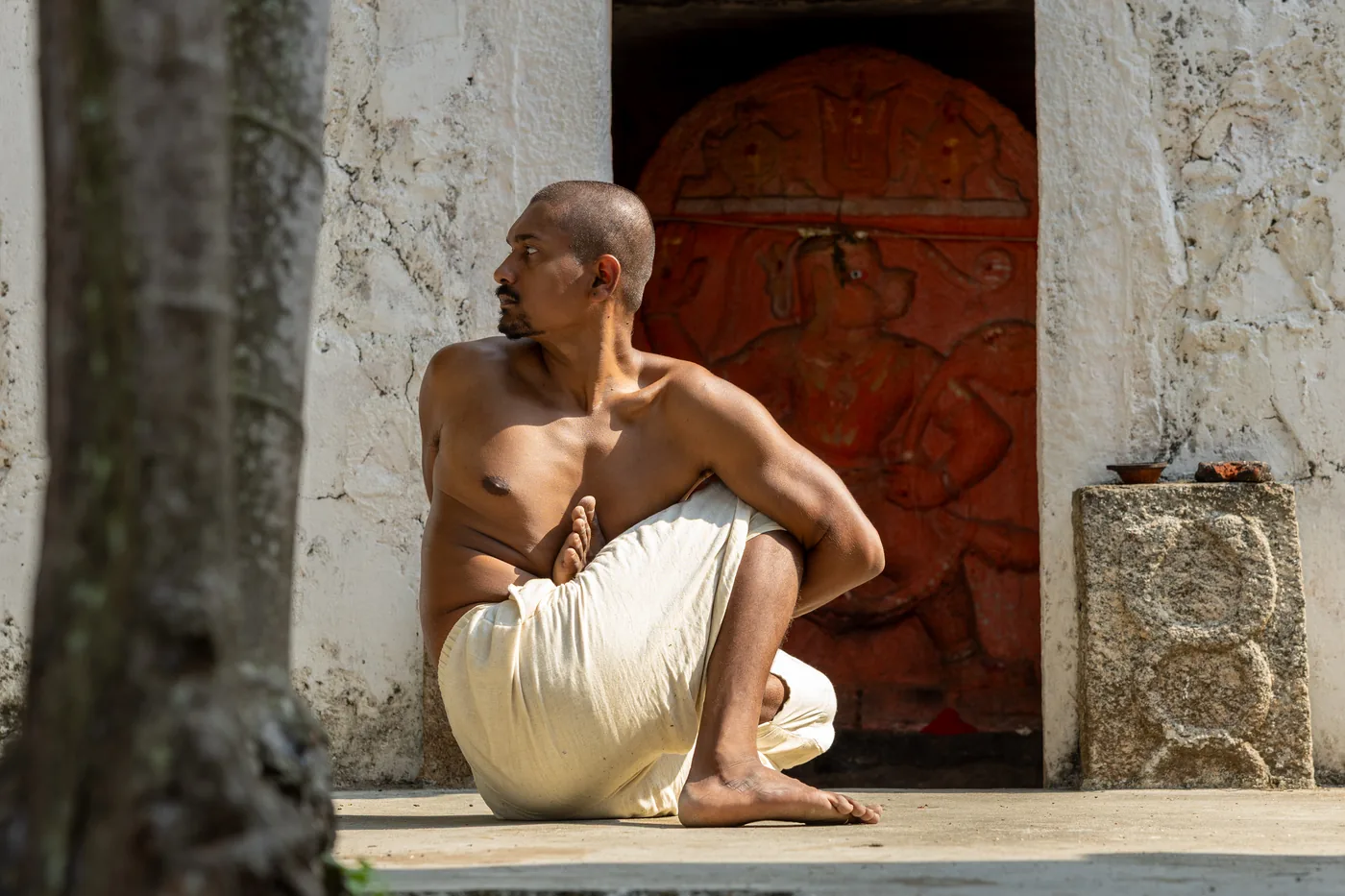
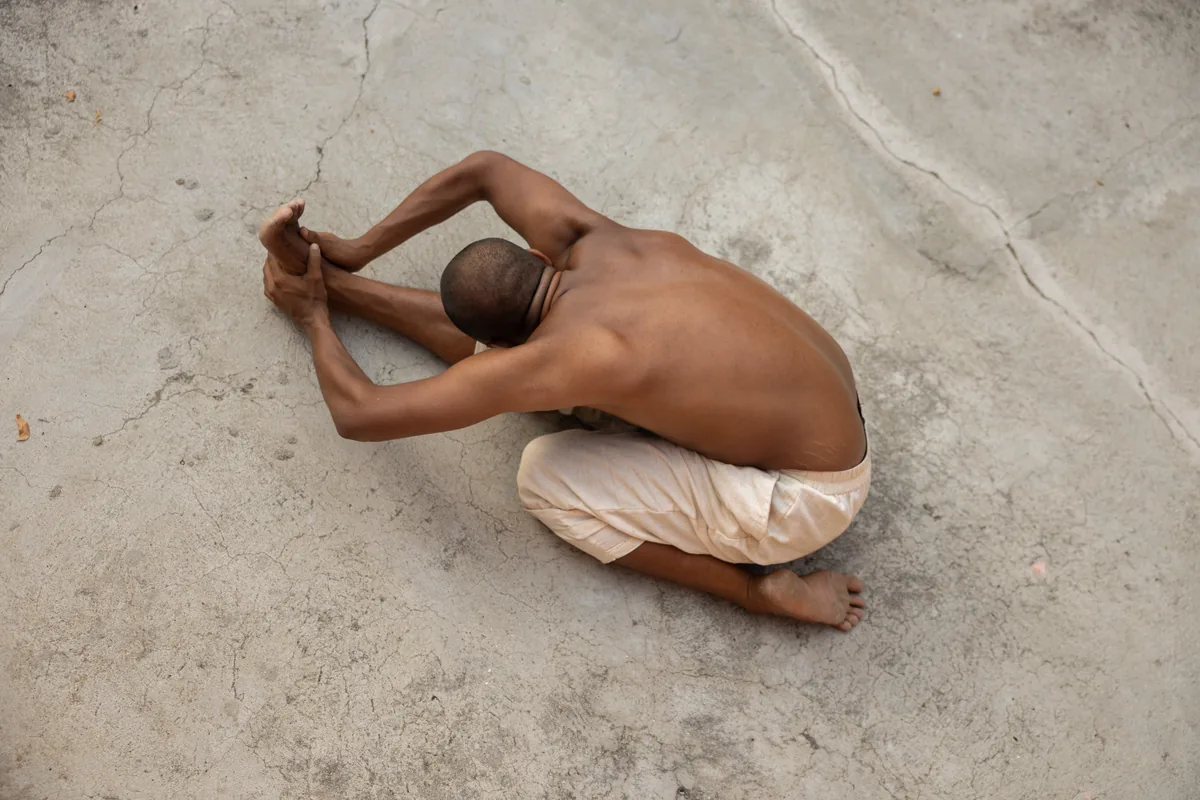
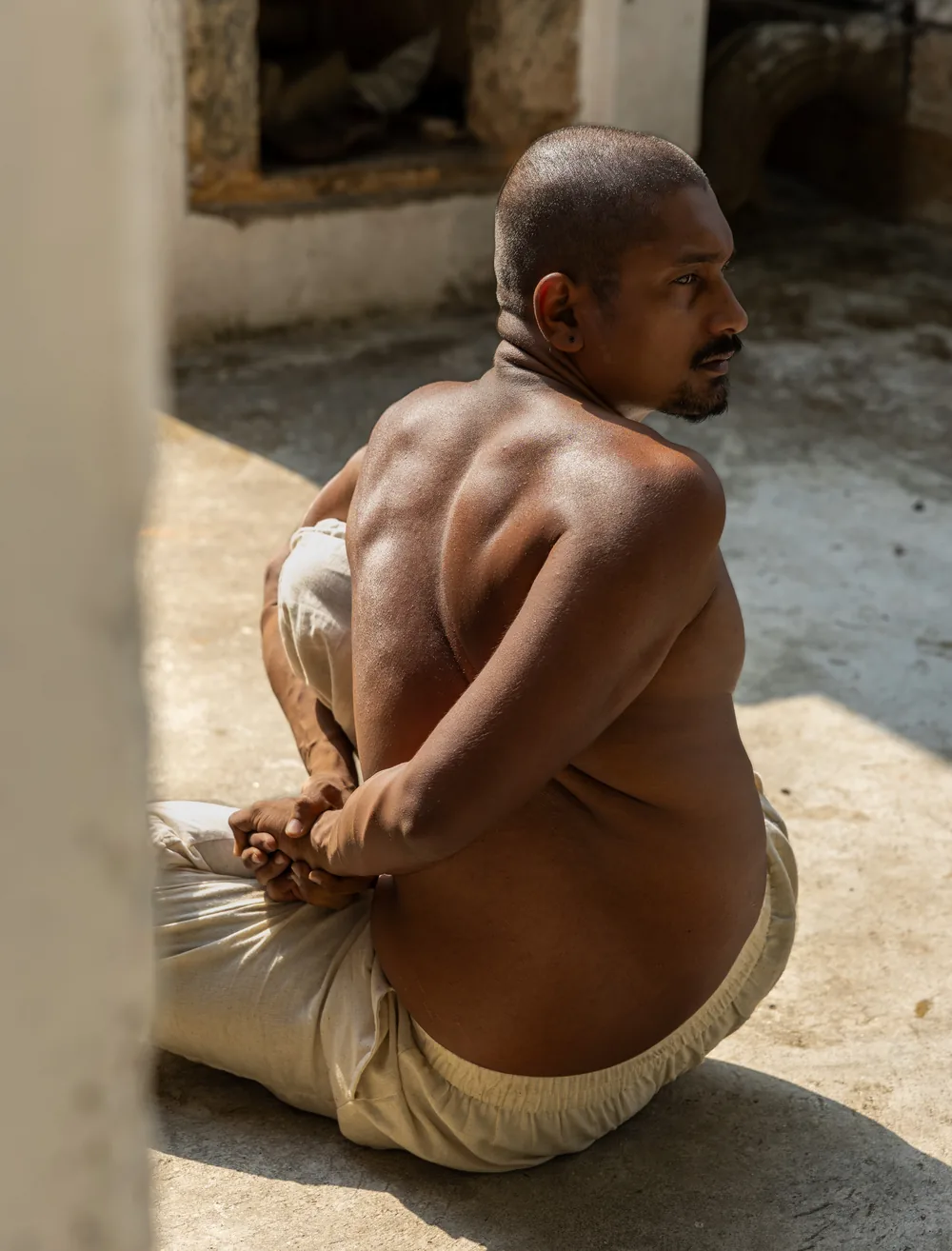
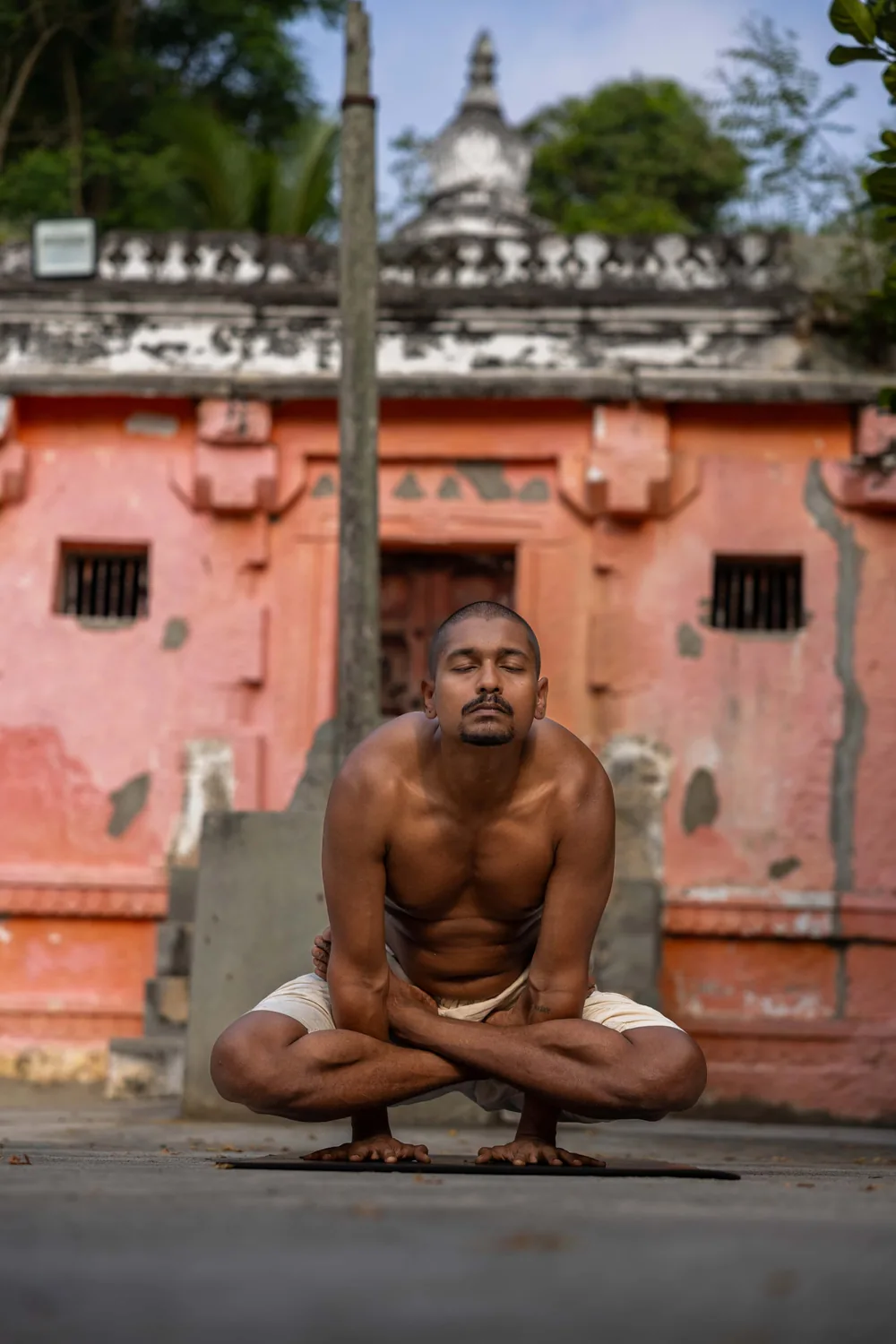
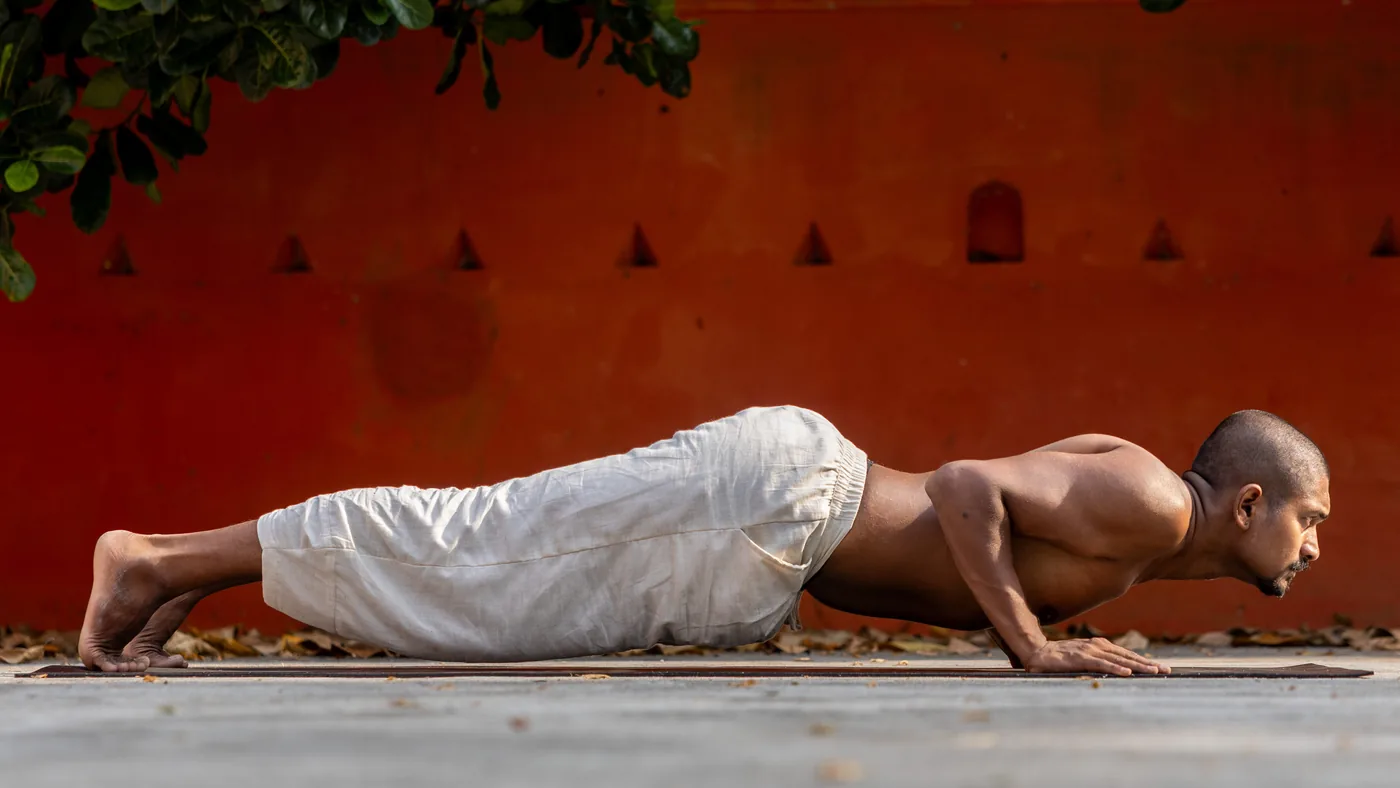
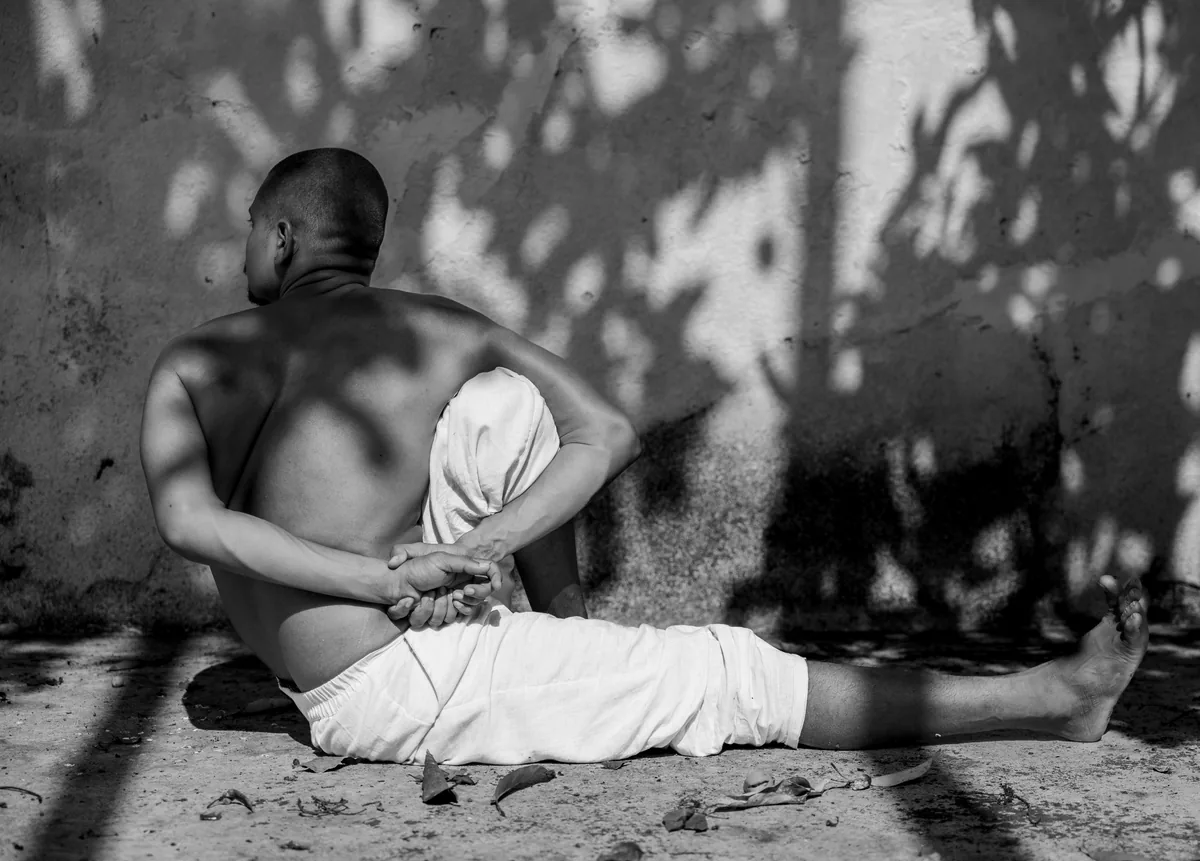
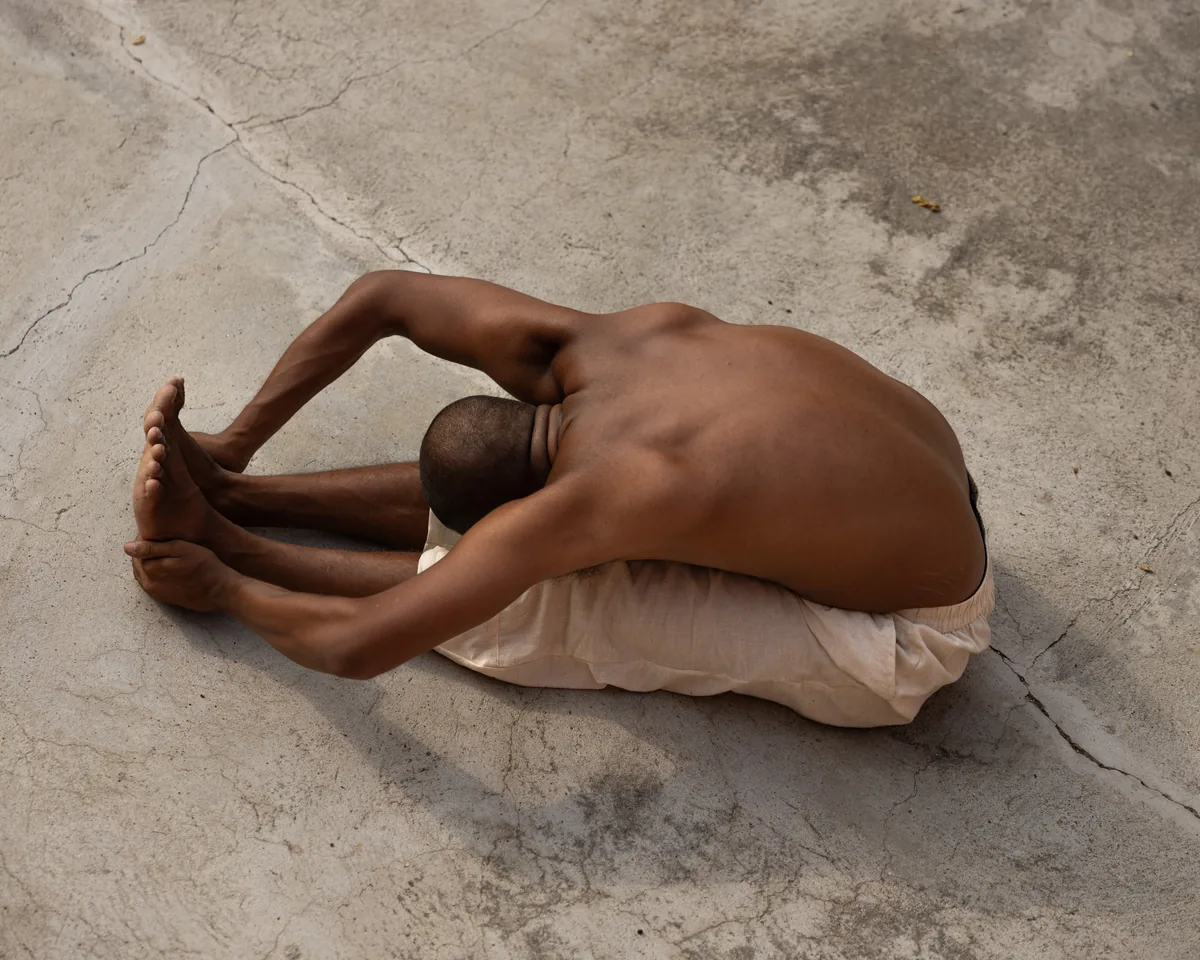
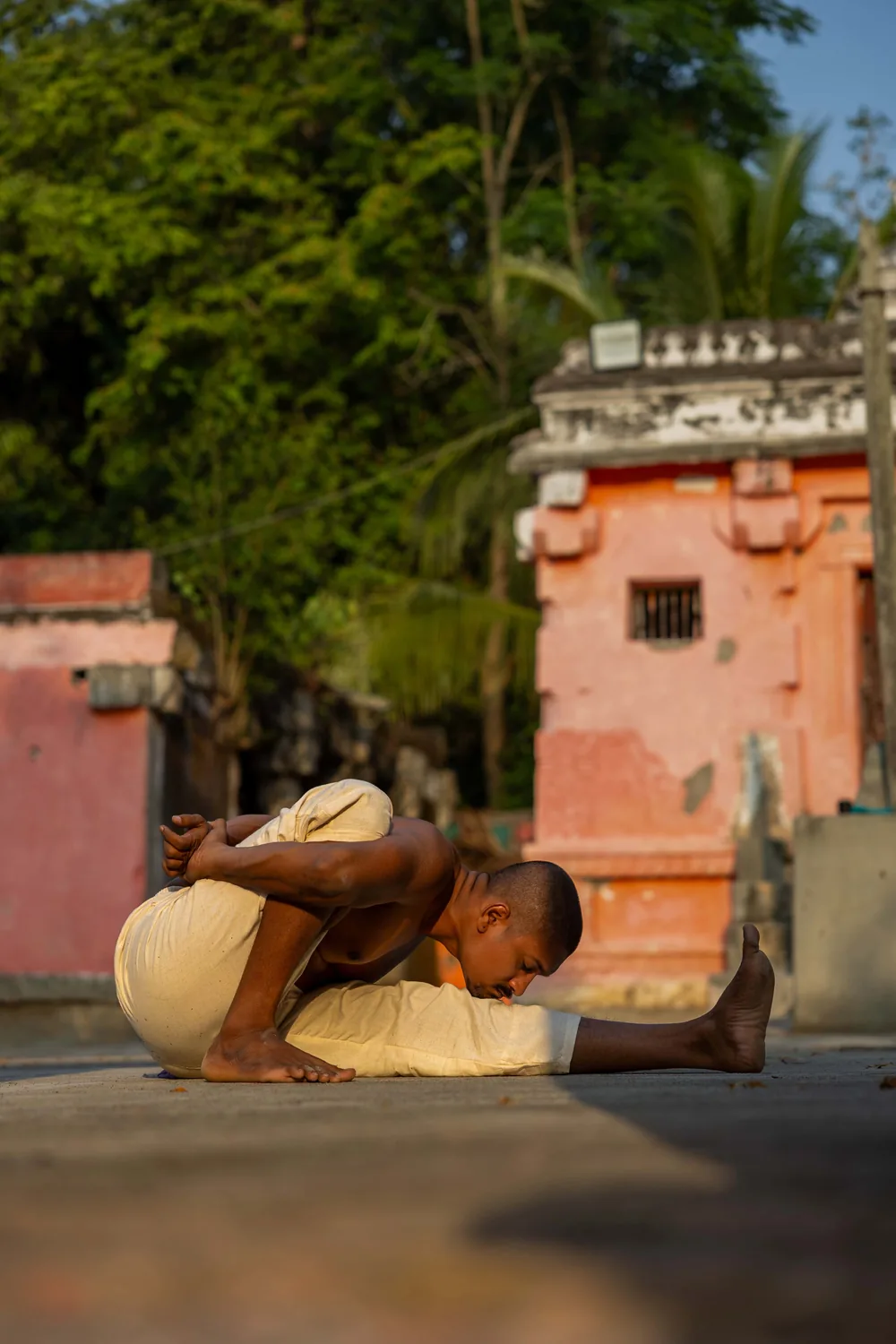
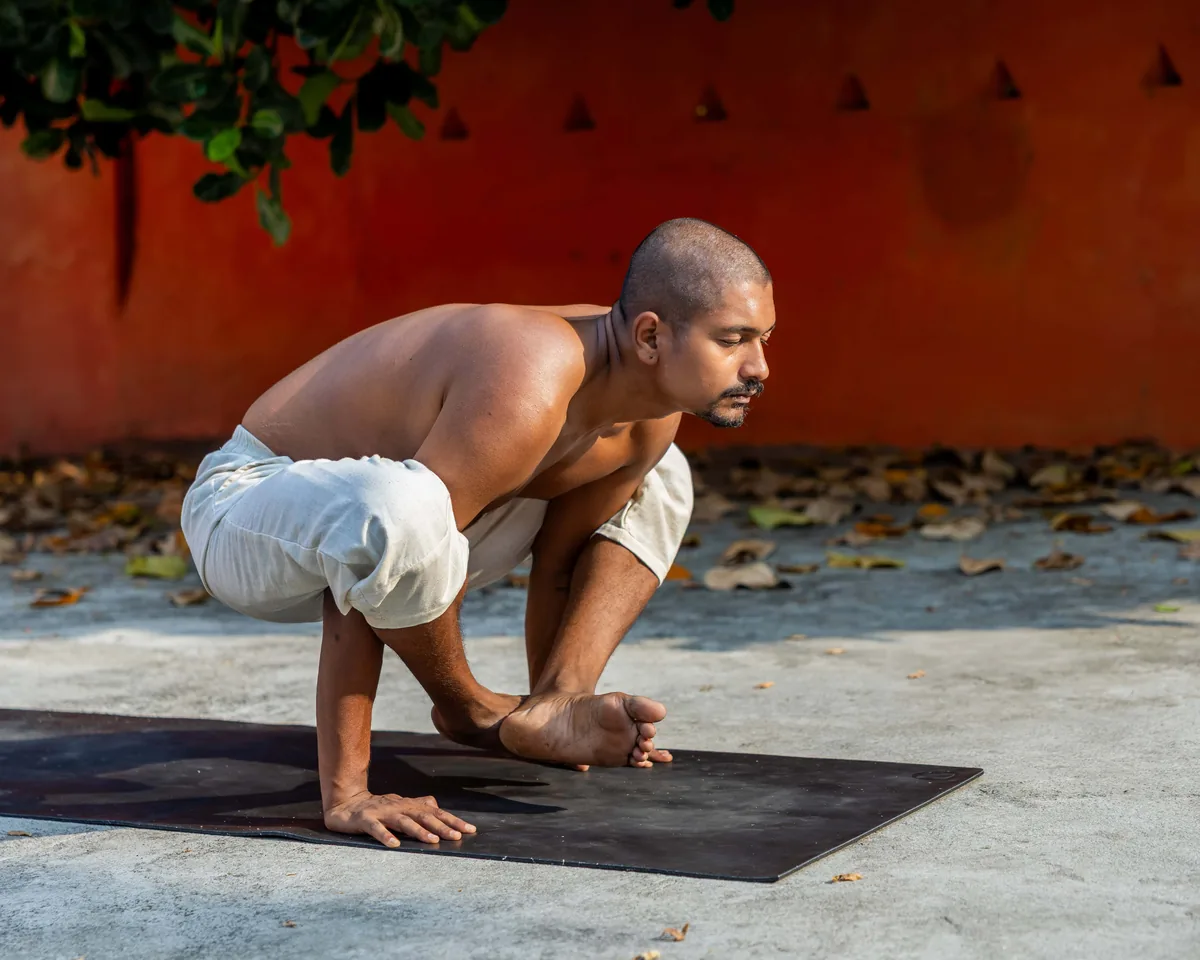
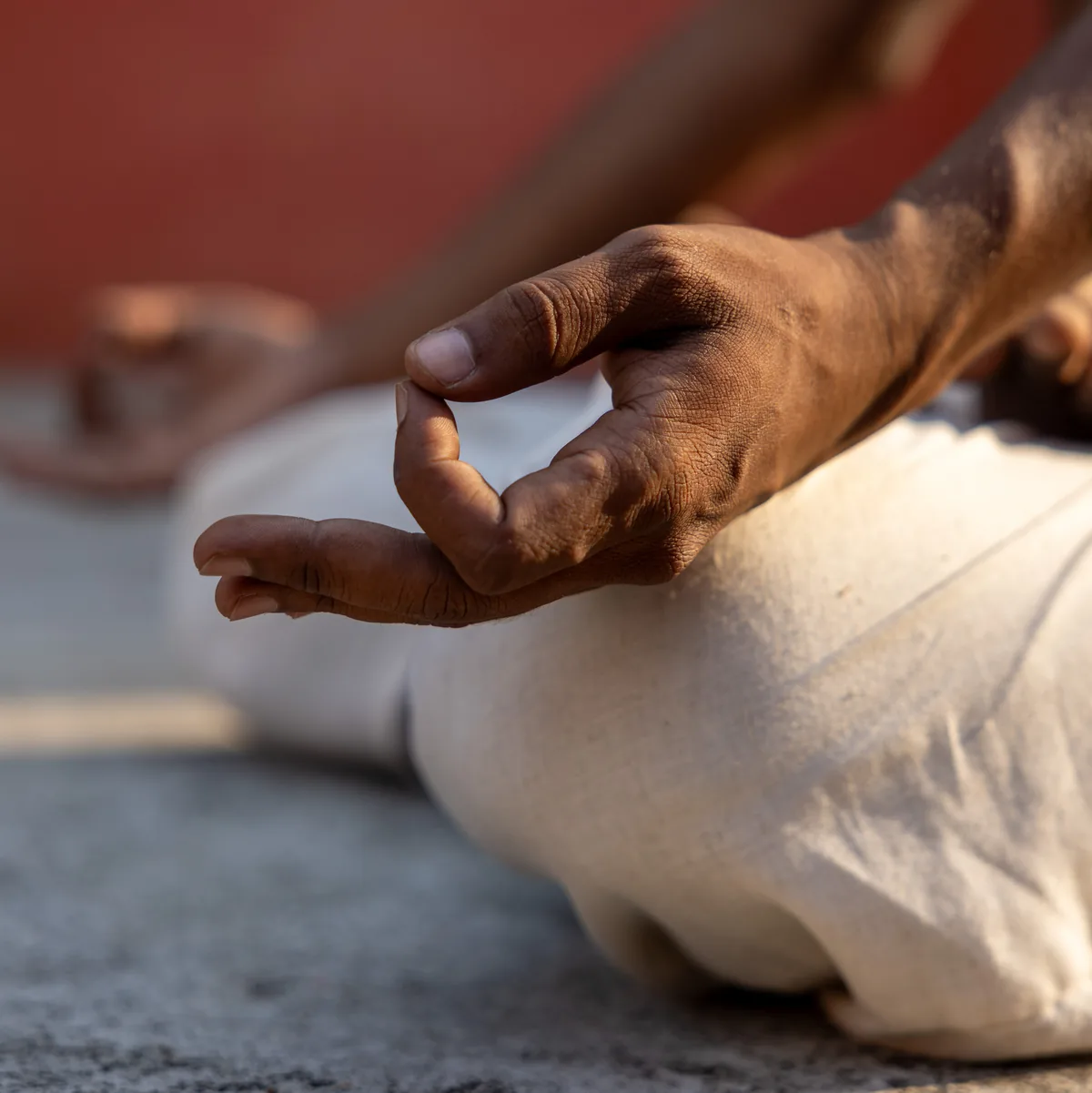
Every photograph shows Vishnu, captioned with the Sanskrit name of the posture.
Moon days
Rest on the full and new moon.
Moon days bring fluctuating mental and physical energies, which can heighten the risk of injury. For this reason, the tradition recommends rest from physical practice on these days.